
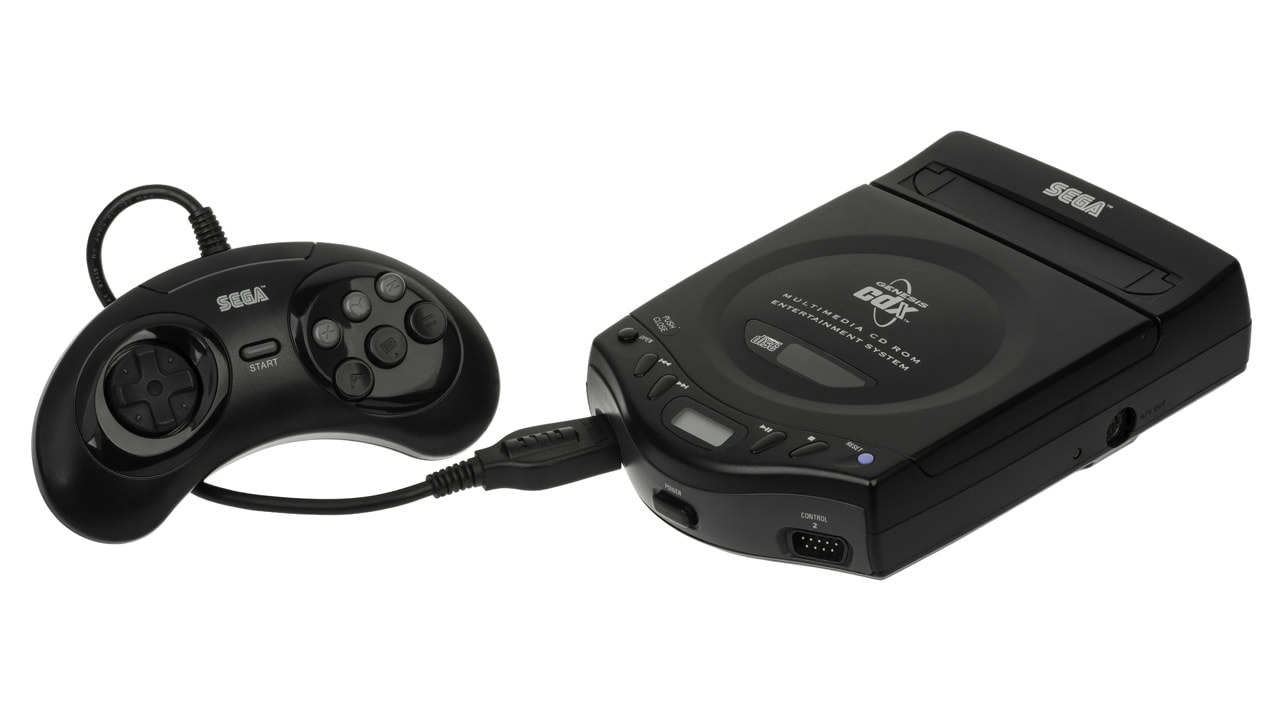
After a trial launch in Japan in October of 1982, the compact disc was first released in the West in March, the following year. It was a digital stranger in an analog world. Yet it was able to completely revolutionize the record industry in less than a decade. The compact disc would subsequently go on to do the same for computer software, and shortly thereafter, video game consoles.
The first company to utilize this technology for a game console would be NEC, with their 1989 CD-ROM add-on to the TurboGrafx-16, the TurboGrafx-CD/PC Engine CD-ROM2 (and later Super CD/TurboDuo). They would soon be followed by Sega, who would release a CD add-on for their own Genesis (Mega Drive) console in 1992, known as the Sega (Mega) CD. Several others would also appear in the years that followed, including Sega's Genesis/Sega CD follow-up, the Saturn, as well as Sony's incredibly successful PlayStation console. Eventually, the industry would begin to experiment with other, similar formats, starting in 1999 with what would sadly be Sega's final home console, the GD-ROM equipped Dreamcast.
While the formats would continue to evolve over the years, first to DVD, then Blu-ray, and finally Ultra HD Blu-ray, digital disc media use in the video game industry has continued on, right up to the present day. Yet, despite having inferior storage capacity and being more prone to piracy, CDs were always able to offer one thing that none of the disc formats that have followed since could, the ability to double as an audio disc. That being said, not every CD game released came with audio tracks on the disc, and the number of TurboGrafx-CD and PlayStation releases that boasted them was somewhat limited. A pretty significant number of Sega CD and Saturn games all did, however.
That specific feature makes all of those consoles a particular boon to both those nostalgic for that era of gaming, and general audiophiles alike. As one who considers himself to be in both of those camps, and as a service to like-minded individuals, I thought I might take it upon myself to compile a list of some of the best CD games to include playable audio tracks on the disc. Continue on after the break to see 12 of the best of these games to appear on these consoles. I'm also including the composer, year of release, and number of audio tracks (not counting blank and/or unplayable data tracks).
The first company to utilize this technology for a game console would be NEC, with their 1989 CD-ROM add-on to the TurboGrafx-16, the TurboGrafx-CD/PC Engine CD-ROM2 (and later Super CD/TurboDuo). They would soon be followed by Sega, who would release a CD add-on for their own Genesis (Mega Drive) console in 1992, known as the Sega (Mega) CD. Several others would also appear in the years that followed, including Sega's Genesis/Sega CD follow-up, the Saturn, as well as Sony's incredibly successful PlayStation console. Eventually, the industry would begin to experiment with other, similar formats, starting in 1999 with what would sadly be Sega's final home console, the GD-ROM equipped Dreamcast.
While the formats would continue to evolve over the years, first to DVD, then Blu-ray, and finally Ultra HD Blu-ray, digital disc media use in the video game industry has continued on, right up to the present day. Yet, despite having inferior storage capacity and being more prone to piracy, CDs were always able to offer one thing that none of the disc formats that have followed since could, the ability to double as an audio disc. That being said, not every CD game released came with audio tracks on the disc, and the number of TurboGrafx-CD and PlayStation releases that boasted them was somewhat limited. A pretty significant number of Sega CD and Saturn games all did, however.
That specific feature makes all of those consoles a particular boon to both those nostalgic for that era of gaming, and general audiophiles alike. As one who considers himself to be in both of those camps, and as a service to like-minded individuals, I thought I might take it upon myself to compile a list of some of the best CD games to include playable audio tracks on the disc. Continue on after the break to see 12 of the best of these games to appear on these consoles. I'm also including the composer, year of release, and number of audio tracks (not counting blank and/or unplayable data tracks).