12/12 Games
  • Home

The Microsoft Xbox: A 12/12 Retrospective

11/15/2025

Comments

 
Picture
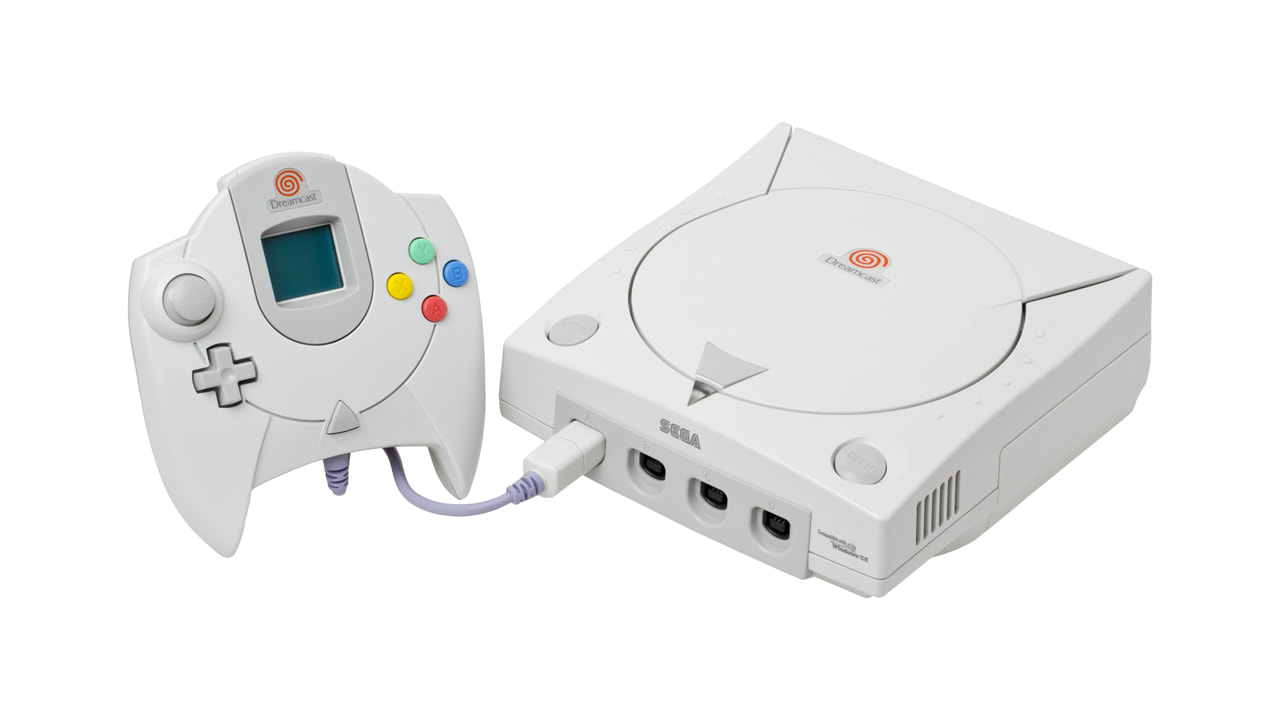
In the late '90s, Microsoft CEO, Bill Gates, saw the increasing power and popularity of video game consoles as a potential threat to the PC industry, so the company began looking for ways to expand into the market. These would initially include partnering with Sega to create a custom version of Windows CE for their Dreamcast console, and then approaching Sony to offer to do the same for their PlayStation 2. Sony, however, declined their offer. They would even go so far as to approach Nintendo to see if they would be receptive to being acquired by Microsoft, but Nintendo would also reject Microsoft's offer.

So, Microsoft decided to set about making their own gaming console. After some internal debate concerning two rival design strategies, a decision was made to use PC parts, including a built in hand drive - - the first console to ever sport one - - as well as a custom version of Windows, featuring DirectX support. It was also decided that the system should be equipped with an Ethernet port in order to enable the future implementation of fast, reliable online play.

The DirectX support, in particular, would play a key role in setting the Xbox apart from other consoles. Not only because it's where the "X" in "Xbox" comes from, but also because the support of DirectX would allow game developers to both create new games, and port existing PC games to the console, with relative ease, while also giving the console comparatively larger processing power, at the same time. Like the PlayStation 2, the Xbox would also utilize a standard DVD drive for gameplay - - with an optional remote and controller port IR sensor later being made available to enable movie playback functionality as well. Unlike the PlayStation 2, however, the Xbox would be the first home console to incorporate real-time Dolby Digital 5.1 surround sound during actual gameplay, instead of just in cutscenes.

Leading up to the launch of the Xbox, Microsoft would go to great lengths to line up a number of high-profile titles for their upcoming console. This would include successfully wooing both Tecmo, and future Microsoft subsidiary, Bethesda; acquiring Mac developer, Bungie, along with the rights to their upcoming title, Halo: Combat Evovled; as well as striking a crucial 11-game exclusivity deal with (then) newly-turned third-party developer/publisher, Sega. Throughout the console's life, Microsoft would continue to get more fantastic games onto the Xbox through other, similar means; and their smart implementation of DirectX in the console certainly wouldn't hurt them in this matter, either. It was these games, more than anything, that really helped the Xbox to stand apart from the competition, and as usual, we have assembled a list of 12 of the greatest titles to ever grace the console, just for your reading enjoyment.

Read More
Comments

The Atari VCS/2600: A 12/12 Retrospective

10/14/2025

Comments

 
Picture
In late 1971, former amusement park manager and electrical engineer, Nolan Bushnell, together with his business partner Ted Dabney, and amusement company, Nutting Associates, created and released Computer Space - - the first arcade video game ever created, as well as the first ever commercial video game. Heavily inspired by the 1962 MIT computer program, Spacewar! - - one of the first ever non-commercial video games - - Computer Space would prove to be a modest success for Bushnell and Dabney. In June of the following year, the pair would form their own video game company, Atari, shortly before parting ways with Nutting Associates.

Their next arcade title, Pong, would also be their first official release as Atari, debuting in the fall of 1972. Pong would quickly become a massive hit, with Atari finding itself struggling to make new machines fast enough to keep up with the demand for them. Over the next few years, Atari would grow by leaps and bounds, releasing several Pong variants, in addition to a variety of other arcade titles. Then, in 1975, Atari struck a deal with department store chain, Sears, which would sell dedicated Pong consoles that could be hooked up and played directly from any consumer television set. Originally branded as the "Sears Tele-Game", Atari-branded versions would eventually become available, as well.

Following the success of their Pong home device, Bushnell started a project within Atari to develop the world's first ever flexible home gaming console, that could allow different titles to be swapped in and out at any time. In order to help see this device come to fruition, a deal was struck in which Atari would be acquired by entertainment conglomerate, Warner Communications, in exchange for $28 million, and Bushnell getting to stay on in his same roles, as chairman and CEO. Though they would ultimately be beaten to market by the 1976 release of US rival, Fairchild's, swappable cartridge-based home game console, the Video Entertainment System (later rebranded as the "Channel F"), Atari would eventually succeed at creating their own such system, as well.

Featuring 6 metal switches (later scaled back to 4) and a faux wood grain panel on the front, the Atari Video Computer System - - or VCS, for short - - would officially launch on October 14, 1977. While Atari was a bit slow to build up a respectable library and user base for the console, they would finally begin to hit their stride by the beginning of the 1980s, with monster hits like Space Invaders and Asteroids (amongst others). It was the (eventual) collection of top-notch titles like these that made the VCS the incredibly popular cultural phenomenon that it was. In honor of the console's anniversary, we would like to take a look back with you, now, at 12 of the finest examples of groundbreaking excellence that the Atari VCS/2600's library had to offer.

Read More
Comments

Notable New Gaming Releases: Ghost of Yotei, Sonic Racing: CrossWorlds, and More...

10/4/2025

Comments

 
Picture
Apologies for the lengthy delay. We actually never intended to wait this long in between new games release posts. There certainly hasn't been a lack of notable new titles to cover. So, it looks like we'll just have to cover the most notable highlights, for this post.

This week saw the release of one of the biggest titles of the year, Sucker Punch's highly anticipated follow-up to their incredible 2020 masterpiece, Ghost of Tsushima. Set a few hundred years later, Yotei follows female warrior, Atsu, on her quest for revenge throughout the northern regions of feudal Japan. Like Tsushima, everything we've seen and heard from this game absolutely screams "must-play title". We certainly can't wait to.

Also out in the last 20 weeks, a welcome new entry in the excellent Sonic & SEGA Racing series; a follow-up to the award-winning 2020 indie hit, Hades; and the first new Shinobi title in nearly a decade and a half! Set aside the order of the Edo period, then jump past the break to see more new releases from the last 140 days.

Read More
Comments

The SEGA Genesis: A 12/12 Retrospective

9/15/2025

Comments

 
Picture
Frustrated by the lack of success following the launch of their 8-bit Master System console in America, as well as their continued struggles against rival Nintendo in the Japanese home console market, Sega quickly began working on their next iteration of gaming hardware. During this time frame, another contender entered the arena - - Japanese computer company NEC, with their PC Engine (the Japanese counterpart to what would eventually be released in North America as the TurboGrafx-16). This would prompt Sega to incorporate a 16-bit CPU into their specs, as well a to focus their design on closely modelling the architecture of their popular System 16 arcade hardware.

In contrast to Nintendo's strategy, the external appearance of Sega's new console would be designed to appeal to a more mature audience. To that end, the console's design would be inspired by, and specifically modeled to resemble, a high-end CD player (which, at the time, was still an increasingly popular luxury device); to the point that it would even end up including a volume slider and headphone jack. While Sega would dub the console the "Mega Drive" in most other regions, Sega of America chairman, David Rosen, would change its moniker to "Genesis" for the North American market, as he thought it sounded better and wanted the system to represent a new beginning for Sega.

Sega would officially launch their Genesis/Mega Drive console in the fall of 1989, in Japan, and then on September 15th, 1989, in North America (following a limited test release, a month prior). While the Mega Drive would fail to achieve much additional success for Sega in the Japanese market, the North American Genesis would prove to be quite a different story. As a result of Sega successfully beating NEC's TurboGrafx-16 and Nintendo's 16-bit Super Nintendo to market, in addition to a brilliant and relentless marketing campaign, Sega was able to not only gain the lead in the 16-bit console race, but hold on to it for the majority of its duration.

Of course, the success of any game console is always largely dependent on the size and quality of its library of titles, and the Genesis most definitely did not disappoint on that front. Between legendary arcade ports, outstanding third-party fare, and some of the greatest sports titles of all time, the Genesis arguably boasted on of the greatest libraries in gaming history. It took some doing, but we have managed to whittle their impressively large list of hits down to just 12 of the greatest to ever grace the console; which we proudly present to you without further ado:

Read More
Comments

The (Regrettably Late) Non-E3 June 2025 PlayStation State of Play & Xbox Games Showcase, & July Nintendo Direct: Partner Showcase Roundup

8/17/2025

Comments

 
Picture
Two months ago, Sony and Microsoft held their traditional mid-year video presentations to show off their biggest upcoming titles. Of course, these unveilings used to take place at the world famous Electronics Entertainment Expo in Los Angeles, which was sadly went defunct after Covid. While we could have written something about it then, we decided it just wouldn't feel right to post one of these articles without all of "the big three" being represented in some way.

Thankfully, Nintendo finally decided to join the party with some new announcements of their own two weeks ago. So if you'd like to blame them instead of us for the lengthy delay of this post, that would be fantastic. Anywho, as per usual, please read on for a quick list of some of the highlights from all three (non-E3) presentations.

Read More
Comments

The Nintendo Game Boy: A 12/12 Retrospective

7/31/2025

Comments

 
Picture
Throughout the second half of the 1980's, Nintendo managed to absolutely dominate the home console market with their wildly successful Nintendo Entertainment System. They also enjoyed some smaller scale success with their Game & Watch/Time-Out line of simple and relatively low-cost dedicated handheld games. Eventually, Nintendo decided to create a  a portable counterpart to the NES, with which to replace the Game & Watch line.

This new device needed to feature more complex games with better graphics and, most importantly, interchangeable game cartridges. It would be designed to closely mirror the look and feel of the Nintendo Entertainment System controller, in order to attract the millions of fans that that console had already amassed. The design team would also settle on an unlit, green-tinted super-twisted nematic monochrome screen so as to help keep power consumption and costs down.

Nintendo's portable, which would ultimately be dubbed the "Game Boy", would launch in North America, on July 31st, 1989. Despite its notable lack of light and color, the little handheld that could would somehow manage to extend Nintendo's domination into the portable segment of the market (even among rival devices that were offering those very features). And dominate, the Game Boy would - - for the better part of a decade, in fact.

Enjoying one of the lengthiest runs of any Nintendo console, the Game Boy managed to grow a pretty substantial library over the course of its life. While many of these titles may have been average or even somewhat poor in quality, there were a number of pretty incredible releases as well. In honor of the 36th anniversary of the portable's North American debut, we would like to present to you our picks for the 12 greatest titles that Nintendo's Game Boy had to offer.

Read More
Comments

The Game Boy Advance: A 12/12 Retrospective

6/11/2025

Comments

 
Picture
Following the near decade-long, David-like success of their original monochrome Game Boy, Nintendo finally decided to release a half-hearted attempt at a colorized successor in 1998 with their markedly minimalistic follow-up, the Game Boy Color (even the device's name was phoned in). Although the system was a long time coming, Nintendo apparently realized pretty quickly that the GBC didn't constitute enough of an effort to suffice. Due to increasing competitive pressure, they decided to reveal an even better color portable, less than a year after the Game Boy Color's North American debut. It's immediate successor, the Game Boy Advance, would feature a much more powerful 32-bit processor, and dramatically
improved graphics, while still maintaining backwards compatibility with both of its predecessors.

Given the fact that the Game Boy Color was barely on store shelves a year before market attention and resources began shifting to its incoming successor, the GBC holds the unfortunate distinction of having one of the weakest libraries of any Nintendo console (not counting, of course, the absolutely massive assortment of original Game Boy titles that it could also play). Thankfully, the Game Boy Advance was around for a number of years before Nintendo decided to unveil their next portable console, so the GBA library was pretty stacked by comparison. Additionally, with hardware performance quite similar to the Super Nintendo, the Game Boy Advance was able to play host to an impressive number of classic ports from the 16-bit era, in addition to the multitude of outstanding original titles.

The incredible assortment of fantastic new and retro titles made the Game Boy Advance a particularly popular device, as it was a boon for fans and collectors of both. It's those outstanding original titles, however, that we will be focusing on today; and we have assembled a pretty respectable list (if we do say so ourselves) of some of the very best that the system had to offer. So, without further ado, here are 12 of the greatest (original) titles that the Game Boy Advance had to offer.

Read More
Comments

Notable New Gaming Releases: Doom: The Dark Ages, Fatal Fury: City of the Wolves, and More...

5/17/2025

Comments

 
Picture
So it's May now and being that we're a pretty good way into 2025, we've seen several high profile releases already. Most recent of which was this past week's hotly-anticipated Doom sequel, The Dark Ages. The latest installment to id Software's legendary first-person shooter series sees the Doom Slayer adding a shield saw - - along with a variety of slower, more methodical gameplay mechanics - - to his crazy assortment of demon-death-dealing devices for the first time.

While it can't be denied that the classic run-n-gun gameplay is one of the main components that made the series so famous for so long, it also seems like it might be a good idea to try something a little different every now and again. Though based on reviews, it seems like your mileage may vary on how well the new shield saw mechanics resonate with you personally. At least there are still plenty of firepower options to choose from.

Also out in the last 3 months, the first new Fatal Fury installment in a quarter century; a beautiful-looking remaster of the outstanding 2006 Bethesda hit, the Elder Scrolls IV: Oblivion; and a port of the fantastic Game Boy Advance cult classic, Ninja Five-O. Become the super weapon of gods and kings, then jump past the break to see more new releases from the last 91 days.

Read More
Comments

Opinion: Why Nintendo Could be in Trouble with the Switch 2

4/30/2025

Comments

 
Picture
Earlier this month, Nintendo hosted their much-anticipated Switch 2 Direct video which provided answers to many of the most pressing questions about the upcoming console. A few games were also announced, including the new Mario Kart World and a Bloodborne-esque FromSoftware exclusive titled The Duskbloods, as well as Switch 2 versions of Metroid Prime 4, Pokemon Legends: Z-A, Hades II and Cyberpunk 2077. Though there was much shown in the presentation to make the multitudes of eager Nintendo fans happy, the days and weeks following the Direct have seen a rather significant amount of fairly vocal dissatisfaction with some of Nintendo's announcements.

First and foremost, the pricing of the console, which at US $450, puts it not only pretty well above industry expert expectations, but also pretty well outside of the price range of your average children's device (which, let's be honest, is what a sizable quantity of Nintendo consoles are purchased to serve as). Not only is the console itself overpriced, but the games too, with some announced to be as high as $80. Again, well above the price of your average children's birthday party gift.

In that same Direct, Nintendo also unveiled an introductory game for the Switch 2 called Nintendo Switch 2 Welcome Tour, a sort of interactive guide to the system's features not unlike Astro's Playroom for the PlayStation 5. What is unlike Astro's Playroom, which came pre-installed on every PS5 console as a free bonus, is the fact that Nintendo will be audaciously charging new Switch 2 owners $10 for their digital tour. While you could maybe try to chalk the high hardware and software prices up to the economy or it simply being a reasonable amount to ask for the type of tech that Nintendo is offering, it's extremely difficult to see them charging for an instructional guide to their hardware as anything other than straight up greed.

Read More
Comments
<<Previous
Forward>>

    Categories

    All
    12/12 Retrospectives
    12 Best GOTY
    6 Favorite Games
    Apple
    Arcade
    Atari
    Coming Soon
    E3
    Game Changers
    Games For Dads
    Games To Play When...
    GOG
    Humble Bundle
    NEC
    New Releases
    Nintendo
    Opinion
    PlayStation
    Reviews
    SEGA
    Site
    SNK
    Soundtrack
    Steam
    Xbox


    About

    12/12 Games is the
    place to come if
    you're looking for a
    fantastic mix of
    gaming news,
    ​reviews, nostalgia,
    and more.


Home

Contact

Copyright © 2015